4.3Electrochemical (anodic) cleaning
Electrochemical (anodic) cleaning
Electrochemical (anodic) cleaning of stainless steel surfaces contaminated with rouging is based on the concept of electropolishing.
Electrochemical (anodic) cleaning of stainless steel surfaces contaminated with rouging is based on the concept of electropolishing.
As a reversal of the electroplating process, electropolishing uses a suitable electrolyte and direct current to remove material (metal atoms) on the µm scale from a workpiece surface serving as the anode by means of electrolytic metal oxidation.µm
As a reversal of the electroplating process, electropolishing uses a suitable electrolyte and an application of direct current to remove material (metal atoms) on the µm scale from a workpiece surface, which serves as the anode, by means of electrolytic metal oxidation.
Electrochemical removal processes can be applied successfully and reproducibly in both an immersion bath method and in a suitable wiping technique (as a mobile version). In these controlled electrochemical treatments, the qualitative surface conditions of stainless steel chambers in terms of corrosion behaviour and cleanability are significantly improved.
Electrochemical removal processes can be applied successfully and reproducibly in both an immersion bath method and in a suitable wiping technique (as a mobile version). The qualitative surface conditions of stainless steel chambers in terms of corrosion behaviour and cleanability are significantly improved in these controlled electrochemical treatments.
Before any specific on-site cleaning measures are actually carried out, the equipment operator, equipment manufacturer and the technicians from the electropolishing specialist come together in an engineering meeting to plan the technical, safety-related and organisational procedure and discuss the necessary preparations.
Before any specific on-site cleaning measures are actually carried out, the equipment operator, equipment manufacturer and the technicians from the electropolishing specialist come together in an engineering meeting to plan the technical, safety-related and organisational procedure and discuss the necessary preparations.
Operator representatives in charge of work safety and hygiene are also involved in the preparations, and are given the necessary data and information by the electropolishing specialist.
Operator representatives in charge of work safety and hygiene are also involved in the preparations, and are given the necessary data and information by the electropolishing specialist.
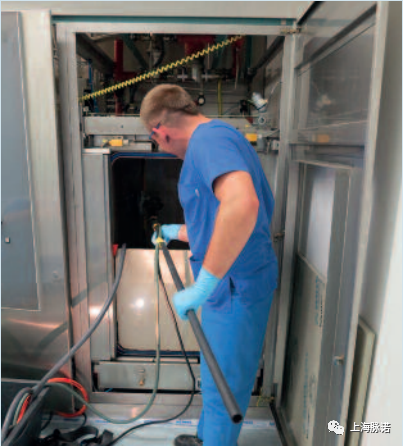
Because all of the work that needs to be performed is completely isolated by film enclosures installed ahead of time (see Figure 13), this measure can be carried out on a sterilization chamber without interrupting MPPU/CSSD operations, and a full continued supply of sterile goods can be ensured using the other devices.13MPPU/CSSD
Because all of the work that needs to be performed is completely isolated by film enclosures installed ahead of time (see Figure 13), this measure can be carried out on a sterilization chamber without interrupting MPPU/CSSD operations, and a full continued supply of sterile goods can be ensured using the other devices.
Electrochemical cleaning involves a controlled wetting of the interior surfaces using a mobile hand tamping unit in combination with a fleece body and an embedded cathode, and a suitable electrolyte. In the designated working area of the chamber surface serving as the anode, material is removed from the surface in the range of 5–10 µm depending on the duration, in a controlled electrical anode/cathode field by means of electrochemical oxidation (= electropolishing).=/5-10µm
Electrochemical cleaning involves a controlled wetting of the interior surfaces with a suitable electrolyte using a mobile hand tamping unit in combination with a fleece body and an embedded cathode. In the designated working area of the chamber surface serving as the anode, a time-dependant targeted removal of material from the surface takes place on the scale of 5–10 µm in a controlled electrical anode/cathode field by means of electrochemical oxidation (= electropolishing).